
Thought for Food:
Shkmeruli
(Georgian Garlic Chicken)
When thinking of Georgia, one might think primarily of it as the birthplace of Joseph Stalin. Alternatively, one might remember it as the home of mythological enchantress Medea and the place where Jason and the Argonauts looked for the golden fleece. If you’re more culinarily inclined, you may be contemplating the great food and the likelihood that Georgia is where wine originated. Or perhaps all of the above.
From the subtropical shores of the Black Sea to the icy peaks of the Caucasus Mountains, this little country packs in a great variety of landscapes. It is wedged between Turkey and Russia, but also shares borders with Armenia and Azerbaijan. And all of those facts, from terrain to neighbors, feed into the cuisine that developed here.
Happily, Chicagoland has recently seen the opening of several Georgian restaurants. There is at least one in the city, but several are in the suburbs. The locations that I have been exploring are Kitchen House Café and Stumara in Wheeling and Aragvi in Palatine. Each restaurant offers something different in size and décor, but the dishes served everywhere are pretty iconic, so while there are slight differences, a basic knowledge of the food will work in all Georgian restaurants.
First and foremost, you'll want to order the cheese bread, khachapuri. Each of the 47 different Georgian provinces has its own variety. Most menus have a separate section for khachapuri, though one generally encounters only three or four varieties. However, most recognizable is the boat-shaped adjaruli khachapuri (also sometimes listed as adjarian khachapuri, because it comes from the region of Adjara). This is filled with molten cheese and an egg, and you tear off pieces of the bread and dip that in the egg/cheese mixture.
The most common flavorings for most other dishes are garlic and walnuts, though cumin and coriander are also reliably present. Shkmeruli (also often spelled chkmeruli) is a dish that bathes chicken in milk and abundant garlic. Lobio is a bean dish (usually pinto or kidney beans) flavored with garlic and walnuts, usually served with homemade bread and pickles. (The word lobio appears in other dishes that include beans, but if listed alone, it’s just the garlicky beans.) Dumplings, especially khinkali, are also ubiquitous. Just know that if you get the meat ones (vs. cheese), they will be &dlquo;soup dumplings.&drquo; This means you hold them upside down by their &dlquo;stems,&rlquo; take a nibble, and then drink the broth, before downing the dumpling and its contents. Tkemali is identified as a plum sauce, but it is sour plum, so quite tart, and tasty in a dish of beets. Pkhali, sometimes identified as &dlquo;salad balls,&drquo; are vegetables (usually spinach or leek or beet) pounded to paste with, of course, walnuts and garlic, rolled into a ball, and decorated with pomegranate seeds. Yum.
I've never had anything at a Georgian restaurant that I didn't love, so know that you're not limited to these dishes. There are great dishes with eggplant, fish, lamb, and more. But the above should get you started. Khachapuri is a requirement, at least your first visit (unless you can't have gluten), but there is plenty more to explore.
Both Stumara and Aragvi have attached bakeries/shops, and Stumara's shop, Pirosmani, is now supplying ready-made khachapuri at Fresh Farms, so there is a possibility of enjoying this at home. And shkmeruli is surprisingly easy to make. This is a dandy dish—but if you can, I do hope you*apos;ll explore some of the restaurants. It really is splendid food.
Shkmeruli
(Georgian Garlic Chicken)
2–3 pounds of chicken (with skin and bones)
salt and pepper
2–3 Tbs. of oil (vegetable or olive)
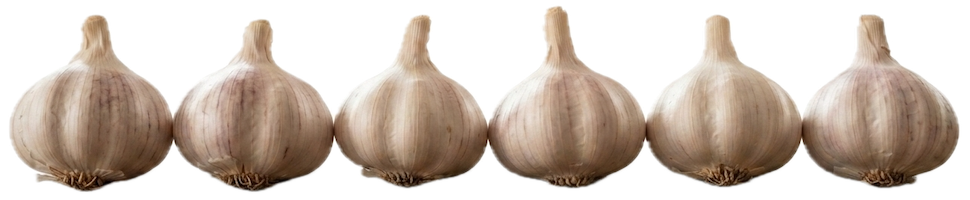
10–12 garlic cloves, minced
2 cups whole milk
handful of fresh cilantro leaves (optional)
Sprinkle salt over the chicken, front and back, and let it sit for 10 minutes. Heat oil in a large skillet, then add the chicken, skin-side down. Cook until golden brown (usually 5-9 minutes, but wait at least five minutes before checking the first time, then decide how much more it might need). Turn over, and cook second side for five minutes. Remove chicken to a separate plate.
Add garlic to oil in pan (the chicken skin will have rendered some fat, but if not, add enough to make it at least a few tablespoons). Do not brown the garlic. Simply heat for about 30 seconds, until fragrant.
Pour the milk into the pan and stir. Bring milk to a gentle simmer, and then put the chicken back in the pan, skin side up. Cover and cook for 30 minutes, or until internal temperature reaches 165 degrees.
Taste sauce and add salt, if needed, and sprinkle with a bit of black pepper and chopped cilantro.
Enjoy.
Makes 2-4 servings.
Notes:
Traditionally, and certainly in restaurants, this utilizes a whole, spatchcocked chicken, cut up before serving. However, for home use, it's easier to pick your favorite cuts. As for cilantro, many restaurants here don't add it, because about fifty percent of Americans hate it. But it is traditional.
Use a deep skillet, or stay by the stove while cooking, as milk boils over very easily. And speaking of milk, it will curdle slightly, but that is expected. I have found that, if it gets too dark, I can just add a splash more milk.
