
Thought for Food:
Budín de Nopalitos
(Cactus Paddle Casserole)
My first exposure to prickly pear was the fruit. My dad would bring it home from business trips, because he knew that anything exotic or unfamiliar would have a welcome reception in our home. I remember that introduction vividly, sitting around the kitchen table, enjoying this latest culinary adventure. As for cactus pads, while Iapos;ve been enjoying them for decades, I don't really remember when I first had those. However, I do remember when I first had the dish below. It was a couple of decades ago, during my first trip to Oaxaca, Mexico.
Cacti, of which there are nearly 2,000 species and 139 genera, are native to the Americas. They can be found from British Columbia in the north to as far south as Chile. However, Mexico has the greatest number and variety of cactus species. While this is a plant with lovely flowers, what it's best known for is its myriad clusters, or aureoles, of spines. Of all the species, only two are regularly used as sources of food: prickly pear and cholla. Of the two, the prickly pear is the most commonly used—and the most widely transplanted.
The thing that identifies the prickly pear cactus, aside from the cactus pears, is the flat stems. Because those broad, green “paddles,” as they are often called, are not leaves. They are stems. The Nahuatl (language of the Aztecs) word for those paddles is nohpalli, which was adopted into Spanish, which is why you will often see them identified as nopales, though also often as nopalitos.
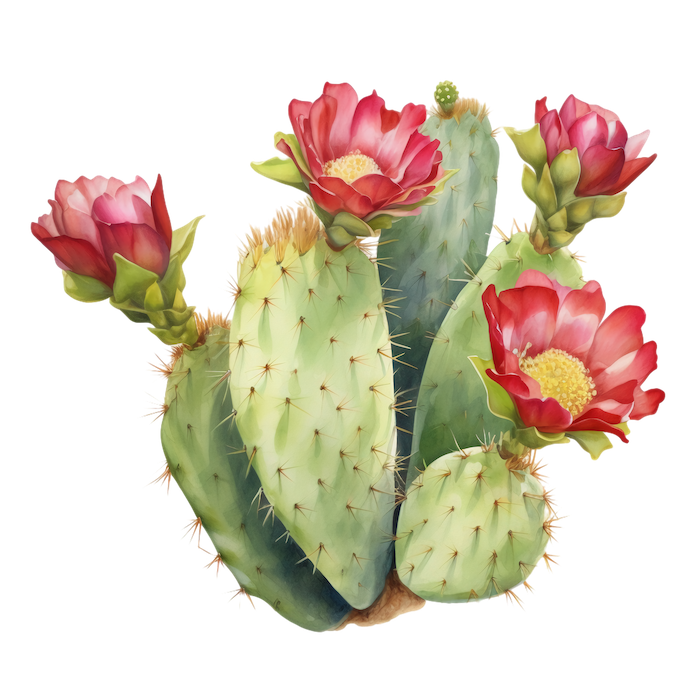
In Morocco, I saw this cactus outlining pastures, keeping flocks in and predators out. I learned that the cactus pears, which are known as Berber figs or Barbary figs in Morocco, have been happily adopted, though not the paddles. (I was interested that they call them figs, because the most common variety in Mexico is known as the Indian fig. Though in Mexico, it is also commonly known as tunas—which became one of my favorite ice cream flavors in Oaxaca.)
When I first had this dish in Oaxaca, I liked it well enough to want to learn how to make it. However, after a couple of hours in the marketplace, watching women preparing the cactus pads for use, I knew that, if I wanted to eat this with any regularity, I'd have to find a way to reduce the amount of work involved. Fortunately, because a lot of people for whom this is traditional fare also need life to be less complicated, one can purchase prepared cactus pads in jars. They make this dish easier and less time consuming.
Budín de Nopalitos
1¾ cups to 2 cups prepared/jarred nopales
1¼ cups of petite diced tomatoes
2 small onions or one large, chopped (roughly 2 cups of chopped onion total, divided)
2 cloves garlic
2 canned chipotle chiles in adobo sauce
3 Tbs. olive oil or vegetable oil
¼ tsp. ground black pepper
4 ounces crumbled queso fresco
3 large eggs, beaten
½ cup cilantro leaves stripped from stems
1 Tbs. corn starch
Makes 4–6 servings.
Notes:
Don't drain or dry off the chiles. Just take them out of the can with whatever sauce sticks to them.
If you decide you want to try using fresh cactus pads, you'll need 6 pads, about 4-inches long. There are instructions online for removing the spines and prepping the pads. But don't forget to wear gloves. You can dice them before cooking, but don't forget you have to cook them if you don't buy the ones in jars. Then, start at the point where this recipe has you rinsing the jarred nopales. If you use fresh pads, you will probably need to add ½ tsp. of salt to dish (at the egg mixture stage).
If you are going to use the prepared cactus pads, know that roughly ⅔ of a 30 oz. jar will be plenty. And the tomatoes are about ⅔ of a 14.5 oz. can.
